Issues at the center of Spokane's future - and of every business's ability to thrive here.
Enforce Public Laws
Consistent enforcement of the laws against public camping, open drug use and blocking sidewalks, paired every time with a genuine offer of help.
Pair Compassion with Accountability
Pair enforcement with immediate access to treatment. Compassion and enforcement together. That is how other cities are saving lives and saving their downtowns.
Build Regional Homelessness Response
One consistent policy on homelessness, addiction and mental health across the city, county and providers, with clear outcomes, firm dates and public reporting. A whole system: detox, sobering, crisis and treatment beds, and housing.
An Integrated Criminal Justice System
Build and fund a regional system that treats crime, addiction and mental illness together: a modern corrections facility, community court and therapeutic courts, detox, sobering and crisis beds, and required treatment.
Clean and Safe Downtown
Address garbage, graffiti, theft and vandalism, and enforce property and nuisance codes consistently, so it is safe to park, walk and do business in the City of Spokane.
Revitalize Downtown
Reduce downtown's approximate 35% vacancy rate. Redesign gateway corridors to invite residents and visitors into the community. Adopt policies and regulations that incentivize redevelopment and turning empty buildings into housing.
Competitive Business Climate
Spokane cannot tax, regulate and restrict its way into prosperity. Every decision at City Hall must pass one test: it makes Spokane a more attractive place to live, raise a family and build a business.
Housing Supply
Predictable permitting, guaranteed timelines and zoning that lets Spokane build. We oppose rent control and unfunded mandates that raise rents and push construction across the state line.
Fiscal Accountability
Follow the City's adopted budget principles: one-time money for one-time costs only, ongoing costs covered by ongoing revenues, and no debt for operations. Maintain prudent reserves and fund balances. Hold the City's credit ratings at no less than AA from S&P and Aa2 from Moody's.
Advocate Citywide
Advocate for businesses and neighborhoods throughout the entire City of Spokane, not just downtown.
Celebrate and Support
Diversity throughout the City of Spokane.
WE ASKED
Where would you spend Spokane's next dollar?
If Spokane had one additional dollar to invest in the community, where should it go first?
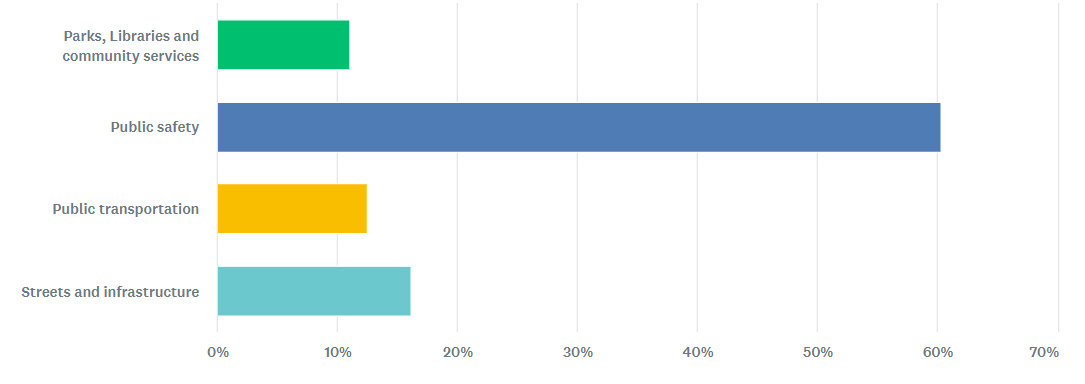
Survey respondents sent a clear message about Spokane’s priorities: public safety should come first. Sixty percent said they would invest the community’s next dollar in public safety, far outpacing streets and infrastructure, public transportation, and parks, libraries, and community services. The results reflect a strong belief that safety is the foundation of a healthy community, supporting thriving businesses, welcoming neighborhoods, accessible public spaces, and confidence in Spokane’s future.